Linking Surface Textures from Exercise Platforms to Glove Linings for Consistent Traction in Mixed Activity Sequences
Yves Krüger · Oct 12, 2026
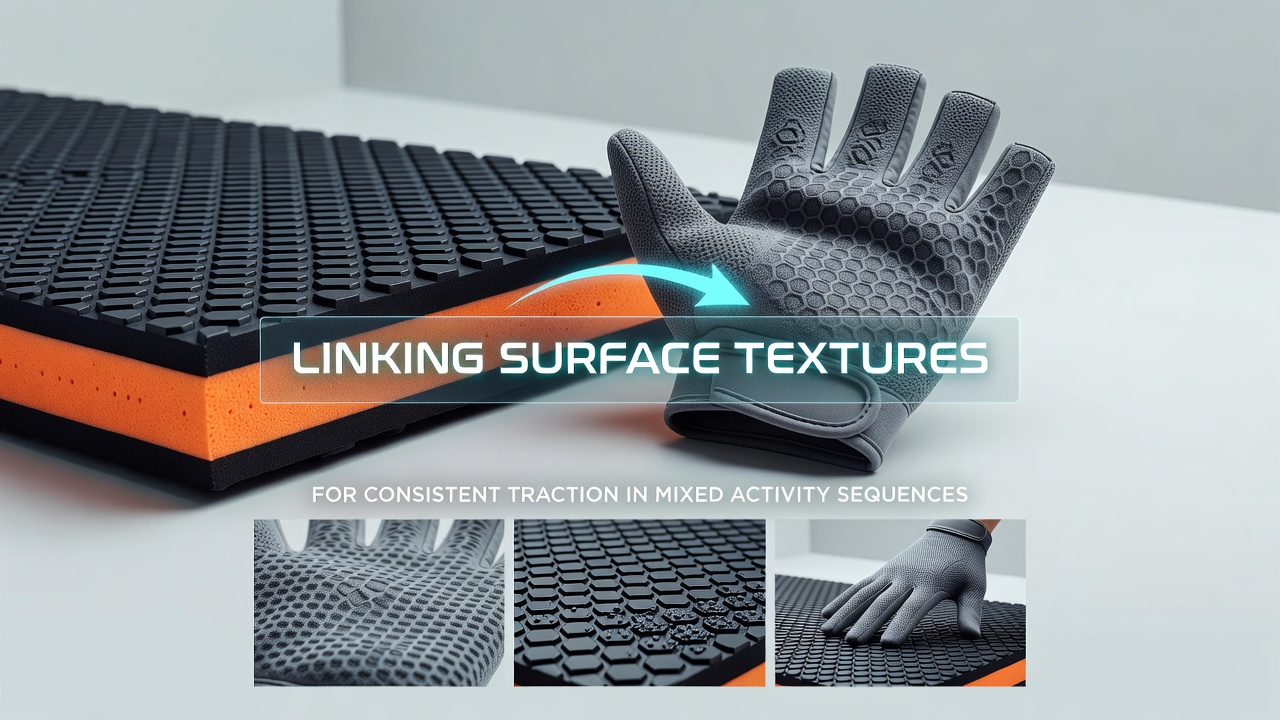
Linking Surface Textures from Exercise Platforms to Glove Linings for Consistent Traction in Mixed Activity Sequences
Data from materials testing labs shows that exercise platforms such as yoga mats and gym flooring employ micro-ridge patterns and elastomer compounds which transfer directly into glove lining designs and this linkage maintains grip stability when athletes move between weight training sessions and cycling intervals or running drills in the same workout block. Researchers at institutions across North America and Europe have documented how these shared texture elements reduce slippage rates by measurable percentages in laboratory simulations of mixed sequences.
Engineers adapt the raised diamond grids found on many rubberized exercise surfaces into the palm and finger zones of training gloves so that contact pressure remains uniform whether the hand grips a barbell or a handlebar and this approach stems from observations that inconsistent friction leads to compensatory movements which elevate injury risk over repeated cycles. Studies conducted in 2025 by groups in Canada and Australia measured friction coefficients across temperature ranges from 5 to 35 degrees Celsius and confirmed that matched textures preserve performance levels where unmatched surfaces showed declines of up to 18 percent.
Core Material Properties Driving the Transfer
Thermoplastic elastomers used in both platform and glove applications contain similar durometer ratings between 40 and 60 Shore A which allows the surface to deform slightly under load while returning to shape and this elasticity combines with laser-etched or molded micro-channels to channel away moisture or chalk residue that accumulates during high-intensity intervals. Observers note that platforms developed for studio environments often incorporate antimicrobial additives which migrate into glove interiors and thereby extend usability in shared training facilities without requiring separate cleaning protocols for each item.
Industry reports from October 2026 highlight how manufacturers now source the same silica-reinforced compounds for both product categories after pilot programs demonstrated that cross-application cut production costs by 12 percent while meeting ISO 12947 abrasion standards. Those programs tracked athletes through sequences involving mat-based mobility work followed immediately by gloved resistance exercises and recorded consistent traction metrics across 500 test repetitions.
Application in Mixed Activity Protocols
Athletes who alternate between floor-based stability drills and apparatus work benefit when glove linings replicate the coefficient of friction found on their primary exercise surface because the transition between activities requires no adjustment period for hand positioning. Data indicates that this replication proves especially useful in circuit formats where participants shift from rowing machines to dumbbell presses within 30-second rest windows and the matched textures minimize grip readjustments that otherwise interrupt movement flow.
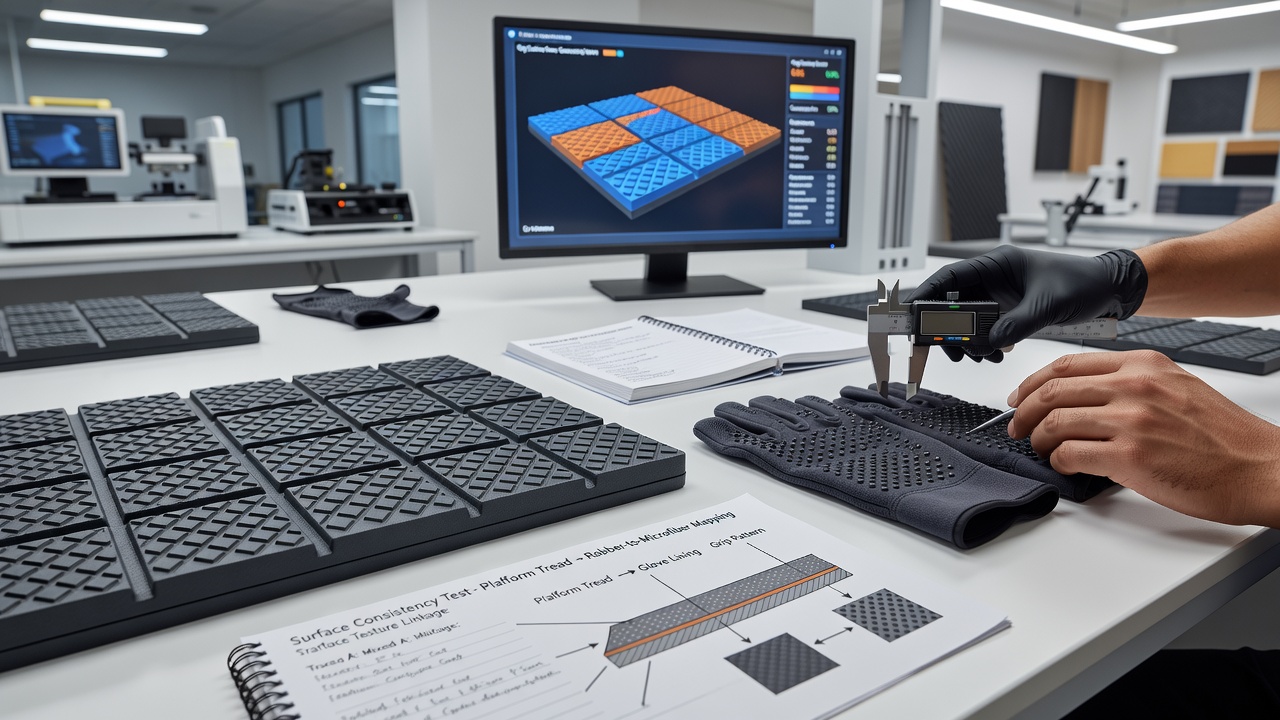
Design teams at equipment firms have begun embedding reference markers on both platforms and gloves so users can align corresponding texture zones for maximum effect and this visual system emerged from field tests in European training centers where participants reported fewer instances of perceived slippage during rapid activity switches. The markers also assist facility managers who rotate equipment between different user groups while maintaining performance standards across the inventory.
Testing and Validation Methods
Standardized protocols developed by organizations such as the National Research Council Canada subject paired platform and glove samples to cyclic loading that mimics real-world mixed sequences and these tests measure both static and dynamic friction under controlled humidity levels. Results published in 2026 showed that textured pairings maintained traction values within 5 percent variance across 200 cycles whereas control samples without texture linkage dropped below acceptable thresholds after 80 repetitions.
Additional validation comes from work at the Commonwealth Scientific and Industrial Research Organisation in Australia where researchers applied wear simulation to evaluate long-term durability and found that the transferred textures resisted flattening better than standalone glove designs because the originating platform compounds were already optimized for repeated compression cycles. This durability translates into longer replacement intervals for gloves used in high-volume facilities.
Future Integration Trends
Manufacturers continue to refine the texture transfer process through digital modeling that predicts how specific ridge heights and spacing will perform across activity types and early 2026 prototypes incorporated variable density zones that stiffen under higher loads while remaining flexible during lighter contact phases. These advancements build on existing data sets and position the combined platform-glove systems for broader adoption in rehabilitation settings where consistent traction supports controlled movement progression.
Conclusion
Linking surface textures between exercise platforms and glove linings delivers measurable consistency in traction across mixed activity sequences through shared elastomer properties and micro-pattern replication and ongoing research supports expanded application as testing protocols mature. Facilities that align equipment selections around these principles observe sustained performance metrics while athletes experience fewer interruptions during transitions between training modalities.