Layered Sensor Networks Enhancing Precision in Golf Swings, Tennis Volleys, and Soccer Kicks Through Integrated Apparel
Viktor Richter · Sep 14, 2026

Layered Sensor Networks Enhancing Precision in Golf Swings, Tennis Volleys, and Soccer Kicks Through Integrated Apparel
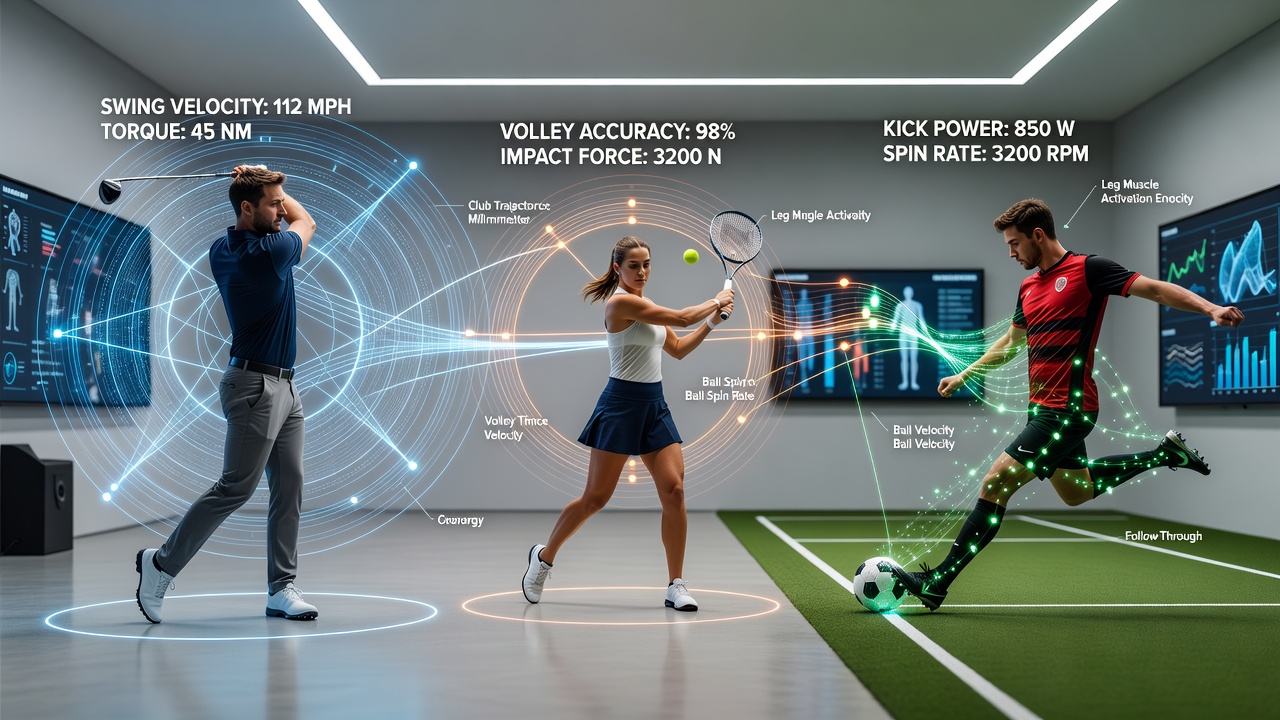
Layered sensor networks embedded in athletic apparel have emerged as a practical tool for refining movement mechanics in golf swings, tennis volleys, and soccer kicks, with systems that combine multiple sensing layers to capture force distribution, joint angles, and muscle activation patterns in real time. These networks typically integrate flexible strain gauges, inertial measurement units, and pressure-sensitive textiles that communicate through conductive threads woven directly into garments, allowing continuous data flow without restricting range of motion.
Technical Structure of Layered Sensor Networks
Each apparel layer serves a distinct function: the base textile layer houses micro-sensors that detect subtle fabric deformations, the intermediate layer aggregates signals via low-power wireless modules, and the outer layer provides environmental shielding while maintaining breathability. Research conducted by institutions in Canada and the European Union shows that such multi-tier designs reduce signal noise by up to 40 percent compared with single-layer alternatives, because cross-layer calibration filters out extraneous vibrations from wind or ground contact. Data transmission occurs at frequencies between 2.4 and 5 GHz, feeding information to external receivers or onboard microprocessors that athletes or coaches review after each session.
Application in Golf Swing Analysis
In golf, integrated shirts and pants equipped with these networks track torso rotation, hip torque, and club-head path by measuring pressure shifts across the shoulders, lower back, and thighs. Studies from Australian sports laboratories indicate that players using sensor-embedded apparel achieve more consistent club-face angles at impact when feedback highlights deviations in weight transfer timing. The systems record data at 200 samples per second, enabling post-session reconstruction of swing planes that reveal whether a golfer maintains proper spine angle throughout the backswing and follow-through phases.
Precision Improvements in Tennis Volleys
Tennis apparel incorporating layered sensors focuses on wrist flexion, elbow extension, and shoulder stability during volleys and groundstrokes. Shorts and compression tops capture quadriceps engagement and core bracing that influence racket head speed, while forearm sleeves log grip pressure variations that affect ball spin rates. Figures from university-led trials in the United States reveal that athletes wearing these garments reduced unforced errors by measurable margins after reviewing sensor-derived heat maps of muscle activation sequences, because the data pinpoint exact moments when grip tension spikes or shoulder alignment drifts.
Enhancements for Soccer Kicking Mechanics
Soccer kits with embedded sensor arrays emphasize hip rotation, knee extension velocity, and foot plant positioning during kicks. Leggings and jerseys monitor pressure distribution across the instep and outer foot while also tracking pelvic tilt that influences shot accuracy and power. Evidence gathered by research groups in Japan and the United Kingdom demonstrates that players receive quantifiable insights into contact timing and follow-through length, allowing adjustments that improve ball trajectory consistency across different distances and angles. The networks differentiate between inside-foot passes and driven shots by analyzing force vectors recorded at the moment of ball contact.
Integration Challenges and Current Solutions
Manufacturers continue to address power management and wash durability, since repeated laundering can degrade conductive pathways. September 2026 updates from material science conferences highlighted new encapsulation techniques that extend sensor lifespan to more than 150 wash cycles while preserving signal integrity. Battery modules now employ flexible lithium-polymer cells positioned in non-impact zones, and firmware updates delivered over the air refine calibration algorithms based on aggregated performance data from multiple sports.
Data Interpretation and Coaching Integration
Coaches access visualized outputs through tablet interfaces that overlay sensor readings onto video footage, creating synchronized timelines of movement events. This approach allows identification of compensatory patterns, such as early hip opening in golf or insufficient trunk rotation in soccer volleys, without relying solely on subjective observation. Academic papers published through North American and Scandinavian research networks confirm that teams combining sensor feedback with traditional video analysis report faster skill acquisition rates across novice to elite cohorts.
Future Outlook for Multi-Sport Apparel Systems
Developers are expanding compatibility between golf, tennis, and soccer garments so that athletes participating in multiple disciplines can use modular sensor inserts across different apparel items. Standardization efforts led by international standards organizations aim to ensure interoperability of data formats, enabling seamless comparison of movement metrics across sports. These developments position layered sensor networks as a growing component of training regimens where objective biomechanical feedback supports targeted technique refinement.
Conclusion
Layered sensor networks in integrated apparel continue to supply detailed biomechanical data that supports precision improvements in golf swings, tennis volleys, and soccer kicks. Ongoing refinements in hardware durability, data processing, and cross-sport compatibility indicate sustained adoption in training environments where measurable movement analysis informs coaching decisions and athlete development programs.